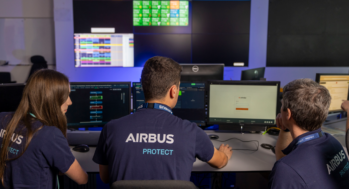
Process Safety Management & Safety Engineering

Enhancing the safety and security of industrial facilities

As well as incrementally improving existing processes and systems, global decarbonisation efforts will require new products and services that are sustainable by design.

Companies capable of prioritising sustainable transformation alongside safety and security will become leaders in the next era of business.

Leading the way

Our risk assessment framework is designed to identify potential risk exposures throughout end-to-end business processes – including design, production, operations, maintenance and recycling.

Our industrial and engineering pedigree, paired with our risk management capabilities, make us a trusted partner for any company looking to enhance its safety and security performance.

Airbus Protect assesses industrial processes and infrastructures and advises on how to maximise their efficiency.

Our experts will also support you in ensuring the safe production, transportation, storage and distribution of hydrogen and other renewable energies for some of the world’s biggest companies.

Why Airbus Protect?

As we work to enhance the safety and security of industrial and nuclear facilities, the following considerations are paramount:

  • Identifying and analysing risks and vulnerabilities
  • Adapting processes, behaviours and mitigation measures
  • Strengthening safety and security systems availability
  • Defining and implementing robust management plans and systems
  • Delivering optimised maintenance and repair cost
  • Ensuring safe and secure energy supply chains

Our offering

Our highly skilled consultants, experts and trainers can help you design or strengthen industrial facilities in a safe and secure way while managing and mitigating risk. Our offering covers:

  • Facilitation of HAZID, PRA, HAZOP, FMEA…
  • Quantitative risk assessment (LOPA, QRA, FERA, OBRA…)
  • Fire risk analysis (for nuclear and defence)
  • Site/Building vulnerability analysis vs. thermal effects, explosion, toxicity (gas cloud)
  • Hydrogen risk analysis
  • Audits of Process Safety Management
  • Reliability of process & safety equipment
  • Safety barriers management (SIL analysis…)
  • Emergency management (training)
  • Fire control/command studies
  • Technical & economic studies of risk reduction
  • Optimisation of maintenance operations, RBM
  • Obsolescence studies

Get in touch to discover how we can support you

What's new?

Filter
Blog Aviation Regulation & Safety
Airbus Protect Explains Part-IS: an EASA regulation on Information Security for Civil Aviation Safety

The need for business and aviation resilience is imperative to manage external risks on highly interconnected systems. Part-IS is the latest mandatory regulation by The European Union Aviation Safety Agency (EASA). The Part-IS objective is to improve Information Security Management Systems (ISMS) by enabling the aviation ecosystem to mitigate and respond to cyber threats, collaboratively [...]

Blog cyber attack screen
Planning for the Inevitable: How to Master Your Incident Response

 What is an incident response plan? An incident response plan (IRP) serves as an individualised, structured playbook for organisations, providing a set of procedures and guidelines when a security incident occurs. These disruptive events have the potential to threaten an IT system’s availability, confidentiality, and integrity, compromising its data.  An incident response plan’s primary focus [...]

Blog continuous airworthiness and continued airworthiness
Continued vs. Continuing Airworthiness: They May Sound Alike, But They’re Not the Same

Aviation is known for its precision, and precision in terminology is crucial, especially when it comes to safety. Two terms that often cause confusion are continuing and continued airworthiness.  At first glance, they seem almost interchangeable. However, in regulatory and operational contexts, the two terms refer to different and distinct processes for aviation. Understanding the [...]