If you want peace, prepare for war
The Romans had a saying: if you want peace, prepare for war (Si vis pacem, para bellum). That is precisely why, in the face of current threats, the EU must demonstrate that it is capable of defending itself—and this necessity has recently been confirmed at the political level.
Over the past decades, Europe has achieved mastery in structuring, coordinating, and harmonising. But is it ready to achieve mastery in defence and—beyond a policy of deterrence—demonstrate real defensive capabilities? This will not be possible without concrete action, political will, and, above all, strong leadership.
As Winston Churchill said, democracy is the worst form of government—except for all the others.
Consequently, the natural challenge lies in reaching binding decisions among 27 member states without compromising on execution and effectiveness. Nevertheless, the most important thing is to understand that this is a necessity; without it, we cannot move forward. Given how difficult the decision-making process—especially rapid decision-making—can be in democratic states, we must find a solution for how we, as the European community, can achieve this.
Surge in defence spending
EU defence spending has risen by more than 31% since 2021, reaching 1.9% of the bloc’s combined GDP in 2024 (€326 billion, with investments hitting a record €102 billion)¹. However, it remains lower than the spending of the US, Russia, or China.
In contrast, Moscow and Beijing have increased their defence budgets by nearly 300% and 600%, respectively².
Although member states retain exclusive responsibility for their armed forces and defence doctrines, the EU plays a key role as a force multiplier for their efforts.
Rebuilding European defence will require massive, sustained public and private investment.
Presented in March 2025 by Commission President Ursula von der Leyen, the ReArm Europe Plan (often rebranded as Readiness 2030) aims to mobilise up to €800 billion by 2030 to bolster EU defence capabilities. The plan focuses on joint procurement, a €150 billion loan instrument called SAFE (Security and Action for Europe), and increased national budget flexibility to tackle urgent security threats and reduce dependence on external suppliers³.
Through the ReArm Europe Plan, the Commission has identified 5 pillars to urgently and significantly step up European defence spending, one of which is contributions from the European Investment Bank (EIB).
The EIB intends to introduce changes to further widen the scope of its defence-related funding. It will double its annual investment to €2 billion to fund projects such as drones, space, cybersecurity, quantum technologies, military facilities, and civil protection.
Defence financing
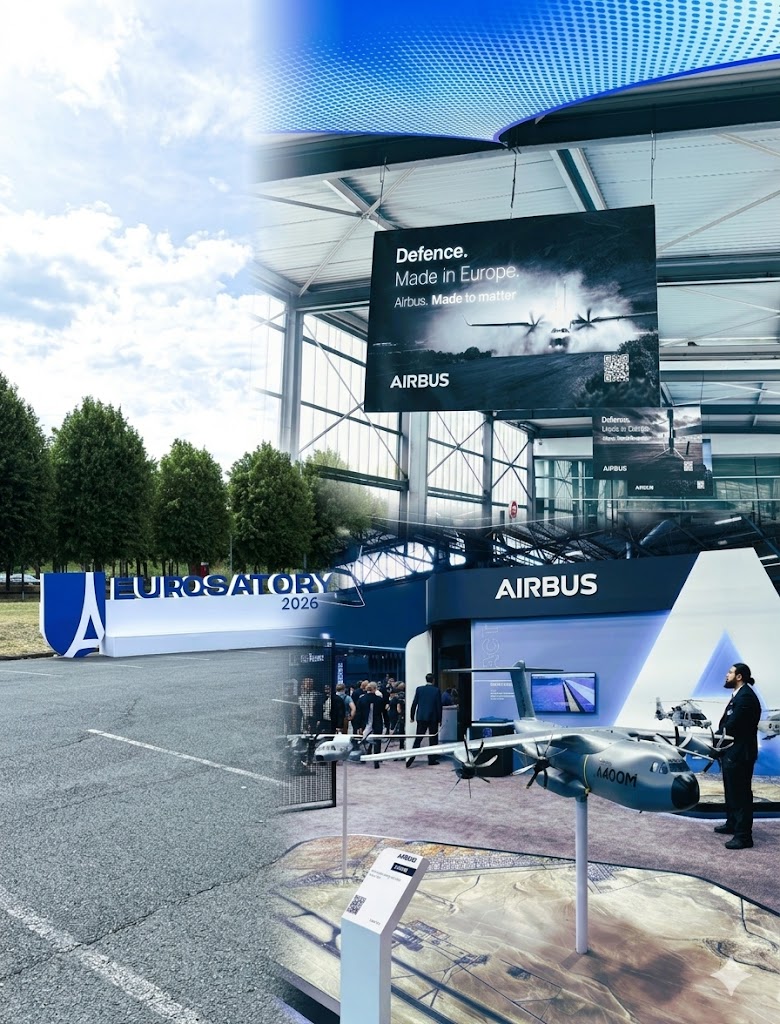
“The days when banks didn’t want to finance defence are over,” said C. Beaudouin, CEO of COGES Events, the organiser of Eurosatory—the world’s largest international exhibition for defence, security, and crisis management.
For the first time in history, the EIB attended Eurosatory 2026 in Paris, which saw record attendance this year. Can this be seen as a clear signal of strong commitment? Given that, to date, approximately 60% of EIB funds have gone toward the energy transition and environmental protection, the answer is most certainly yes.
Adapting new technologies to real-world threats, building industrial capacity without overinvesting, and rapidly strengthening European defence require not only well-considered decisions but also significant investments. Banks, investors, and insurance companies play a key role in this transformation.
“Military Schengen”
At the same time as the ReArm Europe Plan, the White Paper on European Defence – Readiness 2030 was also released. This ambitious defence package provides financial levers to EU Member States to drive an investment surge in defence capabilities. While the ReArm Europe Plan strengthens European defence capabilities with new financial resources, the White Paper frames a new approach to defence and identifies key investment needs.
As indicated in the document, military mobility is a key element of European security and defence. It enhances the ability of Member States’ armed forces and allies to rapidly move troops and equipment across the EU in the event of conflict or intensified hybrid activities. Despite significant progress in recent years, serious obstacles still hinder the efficient movement of personnel and assets within the EU.
To carry out these movements, armed forces require access to critical transport infrastructure adapted for dual use: transport networks, ports, and airfields that serve both the internal market and military logistics. The EU is currently transitioning from a fragmented landscape of national regulations to a unified legal framework. The results of discussions at both the EU and national levels will emerge soon, as the dedicated framework has not yet been finalised.
Such a shift in approach will require the development of appropriate crisis response procedures applicable to situations extending beyond standard peacetime operations. Ideally, these procedures should form part of an organisation’s comprehensive business continuity management system and safeguard critical operations against disruptions. However, creating them requires a process-oriented approach; there is no room for developing isolated procedures intended for activation only when an actual threat arises. Why? For one thing, every procedure must be tested to verify that its assumptions align with actual capabilities. Furthermore, these must be practical documents developed based on analysis, enabling a seamless transition from normal operations to crisis response mode within a specified timeframe.
This timeframe will be strictly mandated by the EU, as the framework establishes—for the first time—the European Military Mobility Enhanced Response System (EMERS) to manage urgent, large-scale movements. Its core premise is that approvals for emergency cross-border military transit must be granted within 6 hours5. Additionally, the framework mandates specific timeframes that member states must adhere to in order to effectively enforce these decisions.
To ensure the Union’s readiness, a regular assessment through an annual Military Transport Readiness Check and possible stress tests will be conducted5.
Exercises will validate procedures, improve coordination among member states, enhance interoperability with partners, and generate lessons to inform policy, planning, and investment.
The military mobility package aims to establish a Military Mobility Digital Information System, covering all military transport permits, traffic management, and customs formalities6. After all, it must be remembered that information regarding troop movements—especially in the face of a threat—constitutes valuable intelligence for many nation-state actors interested in espionage. Consequently, both the physical and cyber protection of this information at every stage of its flow, as well as the management of access to it, will be of critical importance.
The critical role of conventional military forces
During the February 2026 meeting of NATO defense ministers, Under Secretary of War for Policy E. Colby outlined the “NATO 3.0” concept—based on partnership rather than dependency—and emphasized the importance of the fact that “Europe must assume primary responsibility for its own conventional defense”7.
At the same time, he assured that the United States would continue its support regarding the nuclear deterrent.
Conventional military forces comprise the army, navy, and air force; the latter has gained increasing prominence in recent years, primarily due to the use of unmanned aerial vehicles (UAVs) for intelligence, surveillance, target acquisition, and combat purposes.
Given the transformation of warfare, Europe will require the full range of its air defence capabilities, including fighter jets, transport aircraft, helicopters, uncrewed aerial systems, cyber technology and satellites.
Therefore, during the Airbus Defence summit in Manching, Germany in May 2026, the company set out a plan for a safer future, and stressed that Europe’s safety relies on its collective strength.
Less than a month later, at the ILA Berlin Air Show, Airbus showcased a comprehensive and versatile portfolio of Uncrewed Aerial Systems (UAS). The offer includes among others U760 Ravenstorm combat drone, designed to operate alongside fighter pilots in air-to-air combat, air-to-ground strikes, and electronic warfare8.
However, effective defence relies on the ability to rapidly detect, identify, and neutralise drones. These initiatives will be essential to increase both Europe readiness and resilience.
One example of such systems is the Airbus U680 “Bird of Prey” – uncrewed, reusable drone interceptor designed to autonomously hunt and destroy massed, one-way attack (kamikaze) drones, designed to seamlessly operate within NATO’s integrated air defence architecture.
At the end, Airbus goal is to build one European defence system capable of responding to today’s challenges.
Significantly, during this year’s NATO summit hosted by Turkey, NATO Allies announced that over 40 billion dollars will be invested in counter-drone capabilities over the next five years9.