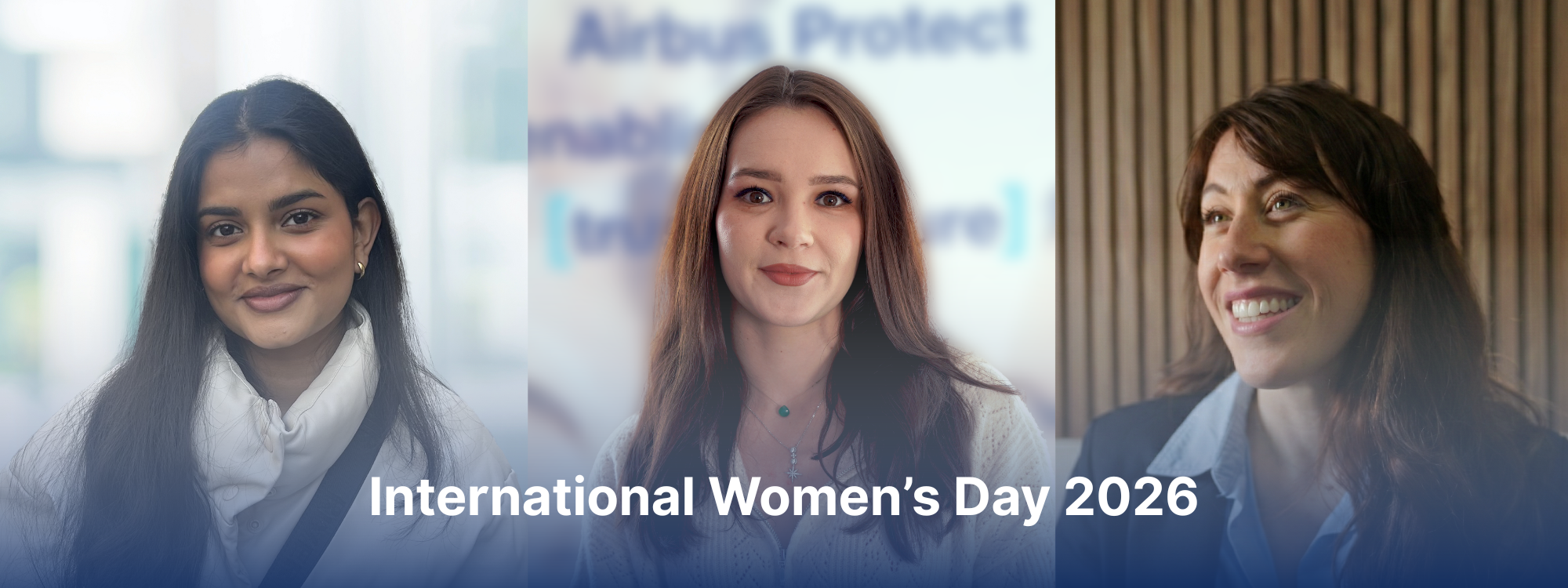
Working in areas like cybersecurity, safety or sustainability requires a high level of resilience. How has the culture at Airbus Protect helped you build the confidence to be part of an industry where the stakes are so high?
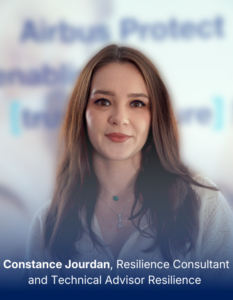
Constance Jourdan: It’s a real challenge, especially when it’s not your original field of study. And it’s even more true when you are a woman: you sometimes have to work twice as hard to make your mark.
I’ve learned that you shouldn’t bet everything on “hard skills.” Technical skills can always be acquired through hard work and training. In my opinion, the most important things are “soft skills” (adaptability, communication, curiosity). They are what allowed me to navigate through a wide variety of subjects. The culture at Airbus Protect helped me a lot with this: it is an environment that values collective intelligence, diverse profiles, and the right to learn. It is this group dynamic that gave me the confidence I needed to assert myself in an environment where the stakes are incredibly high.
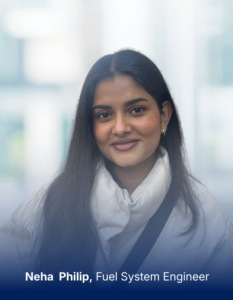
Neha Philip: Working in sustainability involves high stakes, but the culture at Airbus Protect makes that responsibility feel manageable through a genuine sense of community. Even as a newcomer, I’ve found that the technical leaders and highly experienced experts are incredibly warm and approachable, rather than intimidating. Knowing I can go to them with technical challenges and receive supportive guidance has been the key to building my resilience. Their welcoming nature creates a safety net where I feel comfortable asking questions and growing alongside the best in the business.
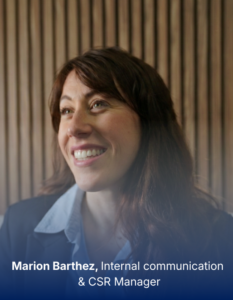
Marion Barthez: At Airbus Protect, my confidence has been built on a culture of shared expertise. In a sector where the stakes are high, resilience does not rest on the shoulders of a single individual, but on the strength of our collective processes.
What gives me the necessary confidence is the balance between absolute rigour and the right to make mistakes and learn from them: we are not asked to be flawless, but to know how to react with agility. This culture of preparation and mutual support transforms pressure into a stimulating responsibility, allowing me to communicate with clarity and composure, even under high stress.
If you could go back and give your 18-year-old self one piece of advice about navigating the corporate world, what would it be—and do you think she’d be surprised by where you are today?
Constance Jourdan: The advice I would give to the young Constance is quite simply to trust herself, to stop self-sabotaging, and to dare to assert herself. I would tell her to be careful not to build a glass ceiling for herself! We sometimes tend to limit ourselves out of a lack of feeling legitimate.
If she could see where I am today, I think she would be very surprised by her professional evolution and, more generally, very amazed to discover everything she is capable of.
Neha Philip: If I could go back, I’d tell my 18-year-old self to stop doubting her capabilities and to trust that it’s okay to do things differently. Coming from a family of doctors and nurses, a career in engineering wasn’t the expected path for me, but I’m so glad I had the courage to follow it anyway. My 18-year-old self would be incredibly proud to see me today as I’m living her dream of being an engineer and making a positive impact by combining aviation with sustainability. After pushing through a degree, a Master’s, and multiple internships to land this role, the best advice I could give her is to believe in herself a little more, all that hard work and choosing a different road led exactly where she wanted to be.
Marion Barthez: The advice I would give my 18-year-old self? ‘Take a step back and don’t take every challenge personally.’ I have learned that professional resilience isn’t about carrying everything on your shoulders, but about transforming pressure into calm, clear-headed analysis.
She would undoubtedly be impressed by the complexity of my role today, but I think she would recognise my determination. I am very proud of how far I’ve come: I have managed to transform my early-career sensitivity into a strength of character that allows me to navigate this high-stakes industry with confidence.
Can you describe a moment at work where you felt a genuine sense of ‘I belong here’? What was it about the environment or the people that made you feel truly seen and valued?
Constance Jourdan: This exact moment happened during a major crisis exercise at one of our clients’ sites. I had the opportunity to participate alongside members of other Airbus Protect teams, notably the OT and Offensive Security experts. It was a real moment of accomplishment: it was our very first crisis exercise operated on the Cyber Range.
In those moments, you concretely see the culmination of all the work done beforehand. You get a real feel for this notion of synergy and cross-departmental collaboration. Beyond the strategic stakes for the company, seeing the direct satisfaction of the client brings immense pride. Both humanly and professionally, the team I was working with was exceptional. It is this combination of collective success and recognition that made me say: “Yes, I truly belong here.”
Neha Philip: The moment I knew I truly belonged was while working and defining the requirements for future hydrogen powered aircraft projects. It is incredibly rewarding to know that my daily work is literally helping to shape a more sustainable future for aviation.
What makes this environment special, though, is the people. I’ve always felt that who you surround yourself with is just as important as the work you do. At Airbus Protect, I’m surrounded by teammates who are not only brilliant and driven but also warm, welcoming, and genuinely fun to be around. In our team, everyone is treated equally, regardless of their experience level, age, gender, ethnicity etc. That culture of equality and shared passion is what makes me feel seen, valued, and proud to be part of this community.
Marion Barthez: Since joining Airbus Protect, I have felt exactly where I am meant to be. Working in communications is not just the culmination of my studies; it is a true vocation. I simply couldn’t see myself doing anything else.
What makes me feel so at home is the trust I am given on a daily basis. From the moment I joined, my ideas were heard and my projects encouraged. It is this balance between passion for my craft and the recognition from my team that gives me such a profound sense of belonging and worth.
The philosophy of ‘Give To Gain’ suggests that our individual success is amplified when we lift others up. Can you share a specific instance where giving actually resulted in a gain for your professional growth or the strength of your team?
Constance Jourdan: This philosophy is perfectly illustrated through a project I had the chance to develop at Airbus Protect: the Resilience Lab. It is the result of a personal initiative because I strongly believe in learning by doing and in the power of discussion to drive ideas forward.
I have loved facilitating these game sessions on numerous occasions, whether internally or at our clients’ sites. Every time, it’s brilliant to see the conversations unfold, ideas fly around, and reflections take root among the participants. That is exactly what ‘Give To Gain’ is: you pass on your knowledge, you nurture the participants, and through their questions and reflections, they teach you an enormous amount in return. These experiences have allowed me to grow, to gain a broader perspective on the subjects I deal with, and to improve my teaching skills.
Neha Philip: For me, “Give to Gain” is a constant cycle of support. I’ve realised that every time I help a colleague with a query, I build a relationship where I feel comfortable asking them for advice in return. This mutual support is what makes our team so strong.
In our weekly meetings, we don’t just celebrate successes; we openly share our hurdles and mistakes. There is no shame in talking about what went wrong because we view it as a collective learning curve. By being honest about my own challenges, I’m giving my teammates the chance to learn from my experience so they don’t have to repeat the same mistake. In return, I gain their insights/advice and a deeper sense of trust. This culture of transparency proves that when you lift others up by sharing the real side of the work.
Marion Barthez: This year, I decided to turn this commitment into action by joining the association ‘Capital Filles’. This organisation supports young girls from underprivileged urban areas or rural communities, from Year 10 to Year 13, helping them shape their future and navigate their path toward higher education.
I am currently mentoring a young girl from Perpignan. My role is very hands-on: together, we visited the open days of the school she hopes to attend, and I am now actively helping her secure an apprenticeship for next year. Beyond the academic side, I answer her many questions about student life in Toulouse.
This experience is incredibly rewarding. We have an excellent relationship, and I am delighted to provide her with the same support I was fortunate enough to receive at the end of my own studies.
From a professional perspective, this mentorship brings me a great deal: it strengthens my listening, teaching, and communication skills. By helping her build self-confidence, I am also enhancing my own ability to unite and support a team. It is proof that by giving your time, you grow both personally and professionally.